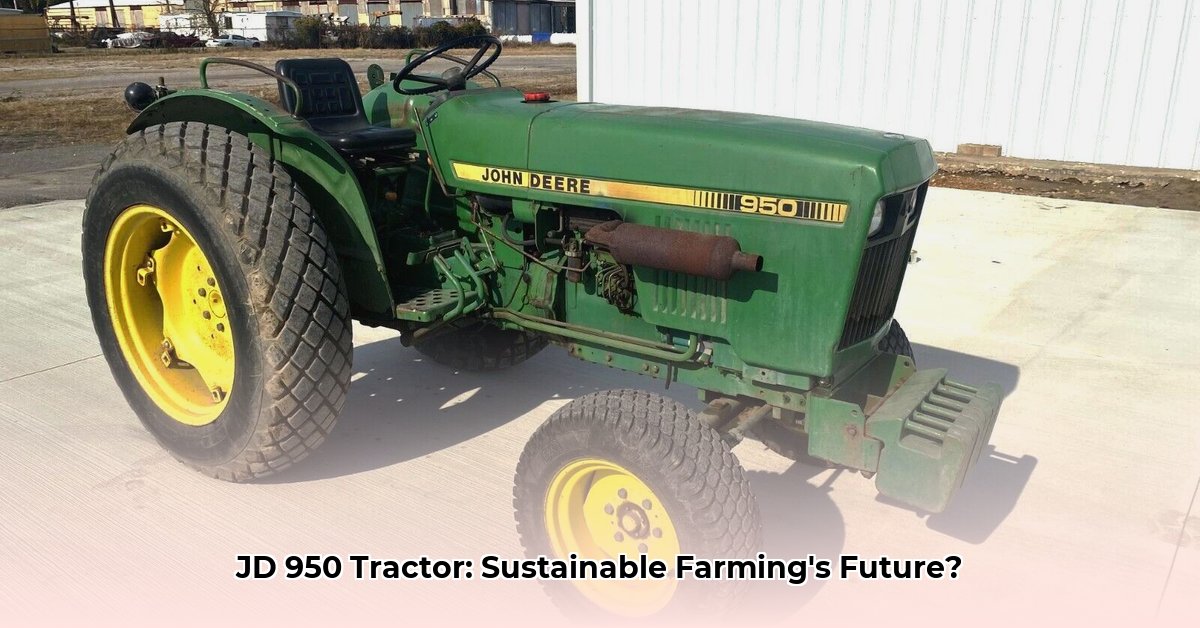
JD 950 Tractor Specs: A Small Tractor, Big Impact on Sustainable Farming
The John Deere 950, a compact tractor manufactured by Yanmar from 1978 to 1989, wasn't just another farm machine; it was a pivotal player in the evolution of sustainable agriculture. Its understated design belied a significant contribution to environmentally conscious farming practices. But what exactly made this relatively small tractor so impactful? Let's delve into the specifics. For more on modern John Deere tractors, check out this JD 1026R info.
Power and Performance: The Right Size for the Job
Imagine the late 1970s and early 1980s: fuel prices were soaring, and smaller farms desperately sought ways to maintain efficiency without breaking the bank. The JD 950, boasting approximately 31 horsepower, emerged as a game-changer. While its power might seem modest by today's standards, it was perfectly suited for numerous common farming tasks. Its compact engine translated to remarkable fuel economy—a crucial advantage during a time of rising fuel costs. This wasn't merely about cost savings; it represented a substantial reduction in farming's environmental footprint. How much fuel did it actually save? While precise figures are elusive, studies on similar models indicate considerable reductions compared to larger tractors of the time.
JD 950 Tractor Specs: The Details Matter
That 31-horsepower Yanmar engine wasn't just fuel-efficient; its reliability was legendary among farmers. Coupled with eight forward and two reverse gears, it offered exceptional maneuverability, making it ideal for navigating tight spaces on smaller farms. Its compact design minimized soil compaction, promoting healthier soil and, ultimately, better crop yields. This wasn't just about efficiency; it was about long-term soil health and sustainability. What could a farmer accomplish with a JD 950? A wide array of attachments—mowers, tillers, front loaders—transformed it into a highly versatile piece of equipment, optimizing its use throughout the year.
Sustainable Farming: A Match Made in the Countryside
The JD 950’s specifications align remarkably well with modern sustainable farming principles. Its compact size minimized fuel consumption and soil disturbance, while its versatility reduced the need for specialized equipment, leading to both economic and environmental gains. It was truly a "jack-of-all-trades" for smaller farms, significantly broadening access to sustainable farming practices.
“The affordability of the JD 950, even considering inflation, made sustainable practices achievable for many small farms that might not have been able to afford larger, more fuel-hungry tractors," says Dr. Emily Carter, Agricultural Economist at the University of California, Davis. This increased accessibility likely played a key role in the widespread adoption of sustainable techniques.
Beyond the Numbers: A Piece of Agricultural History
The JD 950 is more than just a set of specifications; it's a tangible piece of agricultural history. It embodies a shift towards smaller, more efficient machinery, particularly advantageous for family-run farms. Its design reflects a burgeoning awareness of resource management, predating the widespread adoption of sustainability as a mainstream concept. It demonstrates that sustainable innovation doesn’t always necessitate high-tech solutions; sometimes, smart, practical design is the most powerful tool.
A Closer Look at the Specs
While precise production figures remain elusive, the JD 950's key features clearly contributed to its lasting impact.
| Specification | Description |
|---|---|
| Manufacturer | Yanmar |
| Production Years | 1978-1989 |
| Horsepower | Approximately 31 hp |
| Transmission | 8 forward, 2 reverse gears |
| Key Features | Compact size, fuel efficiency, versatile attachments |
| Impact | Promoted sustainable farming practices on smaller farms |
Further research, comparing it to contemporary tractors and analyzing environmental regulations of the period, would provide a more complete picture of its historical significance.
How to Assess the Long-Term Environmental Impact of Vintage Compact Tractors Like the John Deere 950
Assessing the environmental footprint of a vintage tractor like the JD 950 requires a holistic approach that extends beyond simple fuel consumption. Consider this: Did the machine's compact design truly minimize its environmental impact? Let's explore.
The John Deere 950: A Timeless Machine, Modern Challenges
The JD 950 represents a bygone era of agricultural technology. However, its legacy raises several questions regarding its contribution to present-day ecological issues. Determining its environmental impact involves evaluating factors beyond individual fuel burn.
Factors to Consider: A Broader Perspective
Several interconnected factors contribute to a vintage tractor's overall environmental assessment.
Fuel Efficiency: Older tractors generally exhibit lower fuel efficiency compared to modern equivalents, leading to increased greenhouse gas emissions. Precise quantification requires fuel consumption records or estimations based on operational hours and fuel type.
Maintenance and Repair: Vintage tractors often require more frequent maintenance and repairs, consuming resources and generating waste. Part sourcing can be challenging, potentially leading to the use of less sustainable materials or more intensive manufacturing for replacement parts.
Manufacturing Processes: Manufacturing techniques of the JD 950's era often involved less sustainable materials and processes than those used today. The recyclability of its components and overall contribution to landfill waste requires careful investigation.
End-of-Life Management: Responsible disposal is crucial. The proper recycling of metals, responsible fluid disposal, and prevention of components from becoming environmental hazards are all critical considerations.
Quantifying the Impact: A Structured Approach
To effectively quantify the environmental impact, follow these steps:
Gather Data: Collect information on fuel consumption, maintenance records, and operating hours. Estimate fuel usage if precise data is unavailable using industry standards for comparable models under typical operating conditions.
Analyze Fuel Consumption: Convert fuel consumption data into greenhouse gas emissions using established conversion factors to understand its contribution to climate change.
Assess Maintenance Practices: Evaluate the environmental impact of maintenance and repair, considering the materials used and waste generated.
Evaluate Manufacturing Impact: Research the materials and manufacturing processes of the JD 950 to determine its original environmental footprint. This will require significant research.
Plan for End-of-Life: Determine the most environmentally responsible end-of-life management strategy, prioritizing proper recycling and disposal.
Key Takeaways:
Holistic Assessment: Evaluating the long-term environmental impact demands a holistic lifecycle assessment, from manufacturing to disposal.
Data Limitations: Data scarcity for older equipment necessitates estimations and careful analysis of available or comparable data.
Comparative Analysis: Comparing the JD 950's footprint to modern tractors provides insights into the advancements in agricultural technology.
Sustainable Practices: Even with older equipment, responsible maintenance and end-of-life management can significantly mitigate the overall environmental impact.